

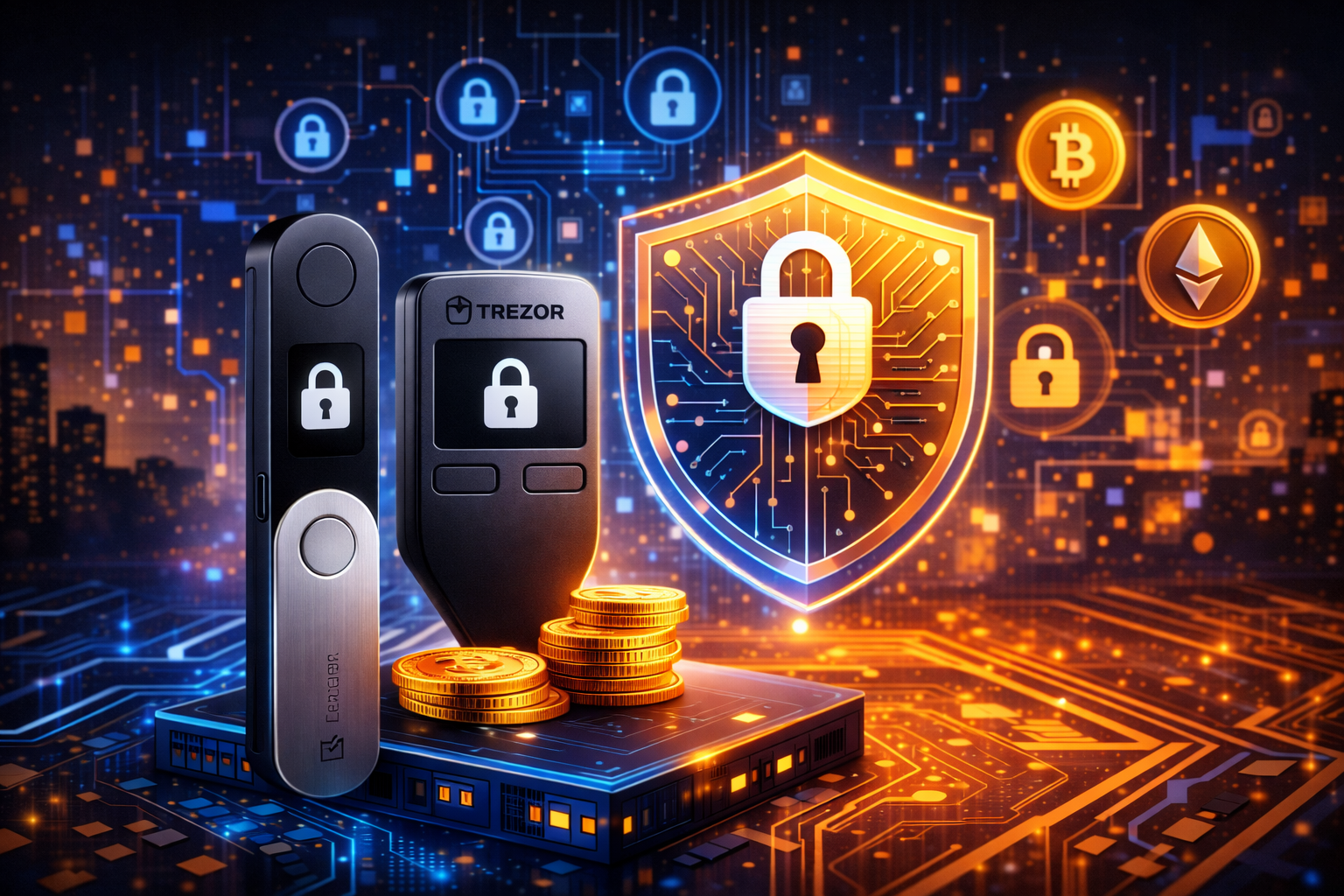
Hardware Wallets
The Gold Standard of Crypto Security
1. Introduction: Why Wallet Security Is Critical
In the crypto ecosystem, security is not optional — it is foundational.
Unlike traditional finance, crypto operates on self‑custody principles:
- No central recovery authority
- No transaction reversals
- No fraud departments
If your private keys are compromised, your funds are permanently lost.
This is why experienced investors rely on hardware wallets — widely considered the gold standard of crypto security.
2. What Is a Hardware Wallet?
A hardware wallet is a physical device that stores private keys offline.
Key characteristics:
- Offline key storage
- Secure transaction signing
- Isolation from internet threats
- Physical confirmation for transfers
Unlike software wallets, hardware wallets never expose private keys to online environments.
3. How Hardware Wallets Work
Hardware wallets use secure elements to generate and store keys.
Transaction flow:
- Transaction created on computer/browser
- Sent to hardware wallet
- Signed inside device
- Signed TX returned to network
Private keys never leave the device.
4. Security Architecture Explained
Core protection layers:
| Layer | Function |
|---|---|
| Secure Element Chip | Key storage |
| PIN Code | Device access control |
| Seed Phrase | Wallet recovery |
| Firmware | Device operating system |
| Physical Buttons | Manual confirmation |
This multi‑layer model prevents remote theft.
5. Hardware vs Software Wallets
| Feature | Hardware Wallet | Software Wallet |
|---|---|---|
| Key Storage | Offline | Online |
| Hack Resistance | Very high | Medium |
| Convenience | Medium | High |
| Cost | Paid device | Free |
For long‑term storage, hardware wallets dominate.
6. Hot vs Cold Storage
| Storage Type | Internet Exposure | Security |
|---|---|---|
| Hot Wallet | Yes | Lower |
| Cold Wallet | No | Very high |
Hardware wallets are the most practical cold storage solution.
7. Setting Up a Hardware Wallet
Step‑by‑Step
- Purchase from official manufacturer
- Initialize device
- Generate seed phrase
- Set PIN code
- Install companion software
Never use pre‑configured devices.
8. Seed Phrase Security
The seed phrase is the master backup.
Best practices:
- Write on paper or metal
- Store offline
- Use multiple backups
- Separate storage locations
Anyone with your seed controls your funds.
9. Supported Assets
Most hardware wallets support:
- Bitcoin
- Ethereum
- ERC‑20 tokens
- Stablecoins
- NFTs
- Multiple blockchains
Compatibility depends on firmware and apps.
10. Using Hardware Wallets with DeFi
Hardware wallets integrate with Web3 interfaces.
Common workflows:
- Connect via MetaMask
- Sign DeFi transactions
- Approve smart contracts
Keys remain offline during interaction.
11. Transaction Signing Security
Before signing, devices display:
- Recipient address
- Amount
- Network fees
Manual verification prevents malware manipulation.
12. Common Threats Hardware Wallets Prevent
They protect against:
- Remote hacks
- Keyloggers
- Clipboard hijackers
- Phishing wallet drains
- Malware signing attacks
However, they do not prevent user negligence.
13. Supply Chain Risks
Attackers may tamper with devices pre‑delivery.
Mitigation:
- Buy direct from manufacturer
- Verify tamper seals
- Initialize yourself
Never trust pre‑seeded wallets.
14. Firmware Updates
Firmware maintains security.
Benefits:
- Vulnerability patches
- New asset support
- UI improvements
Only install official firmware.
15. Multi‑Signature + Hardware Wallets
Advanced security setups combine both.
Example:
- 2‑of‑3 hardware devices required
Benefits:
- Institutional‑grade custody
- Theft redundancy
16. Loss & Recovery Scenarios
If device is lost:
- Funds remain safe
- Recover via seed phrase
If seed is lost:
- Funds unrecoverable
Seed storage > device safety.
17. Cost vs Security Trade‑Off
| Factor | Hardware Wallet |
|---|---|
| Price | $50–$200 |
| Security gain | Massive |
| Lifespan | Years |
For serious portfolios, cost is negligible.
18. Who Should Use Hardware Wallets?
Ideal users:
- Long‑term investors
- High‑net‑worth holders
- DeFi participants
- NFT collectors
Small traders may rely on hot wallets short term.
19. Best Practices Checklist
- Use PIN protection
- Store seed offline
- Enable passphrases
- Verify addresses
- Use official software
Security is layered, not singular.
20. Conclusion
Hardware wallets represent the highest standard in crypto asset protection.
They combine:
- Offline key storage
- Secure signing
- Physical verification
- Recovery redundancy
For anyone serious about crypto custody:
A hardware wallet is not optional — it is essential.
Disclaimer
This article is for educational purposes only and does not constitute financial or cybersecurity advice. Users are responsible for securing their own assets.

Buy crypto in minutes
Use cards or bank transfer to get started fast.