


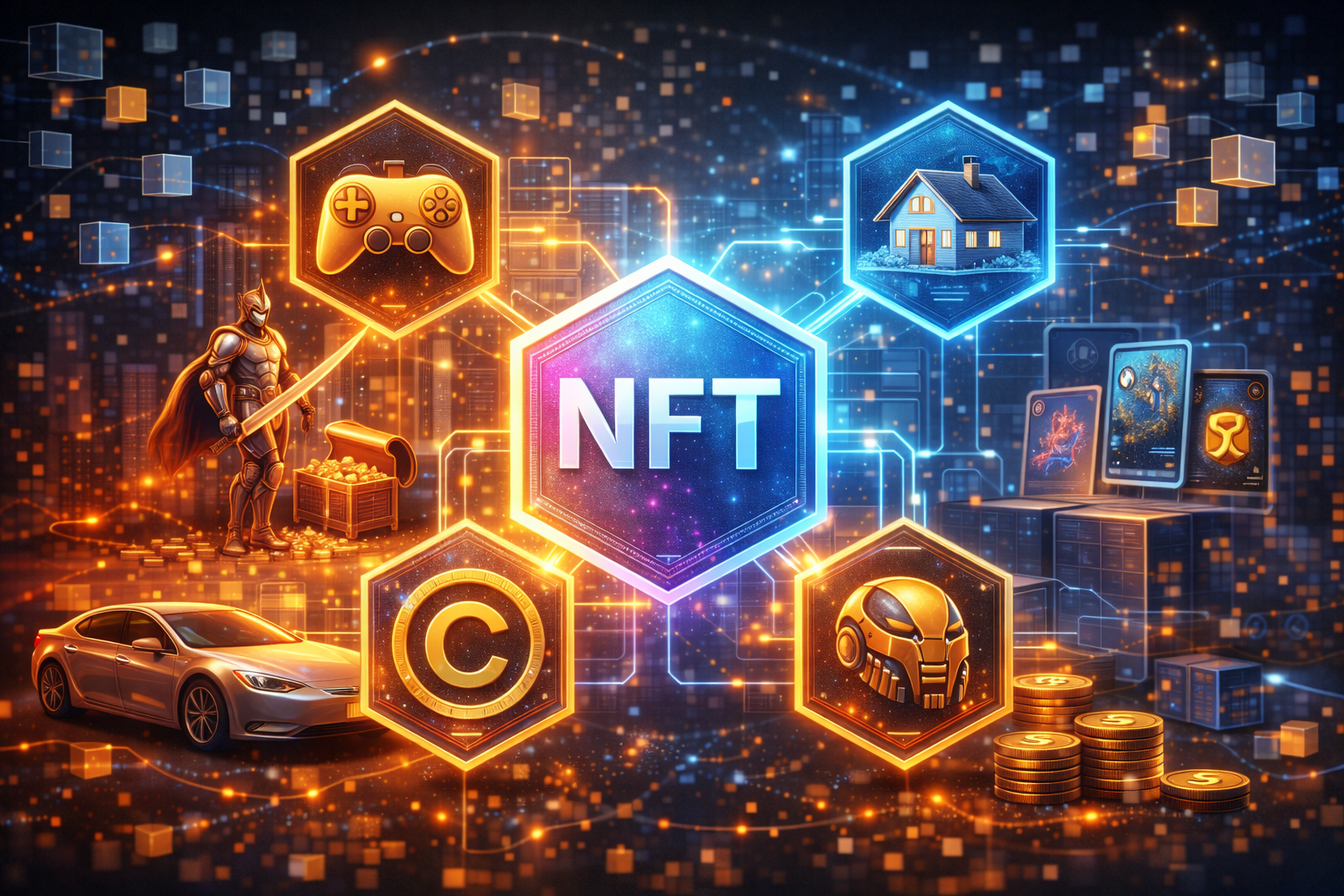
NFTs - More Than Just Digital Art
Context of NFT Evolution
Non-Fungible Tokens (NFTs) have evolved since their market breakthrough from a cultural internet phenomenon to a versatile infrastructure technology. While public perception was long shaped by digital art, profile picture collections, and speculative collectibles, the actual range of applications today extends far beyond that.
NFTs function as unique, non-interchangeable tokens on blockchain networks that can represent ownership rights, access permissions, identities, or assets digitally. Their true innovative power thus lies less in the art market than in the tokenization of rights, assets, and utility structures.
Technological Foundation of NFTs
At their core, NFTs are smart contracts with unique identification features.
Technical properties:
- Unique Token-ID
- Non-interchangeable (Non-Fungible)
- On-chain proof of ownership
- Transferability
- Programmable rights
Standards like ERC-721 or ERC-1155 define interoperability, metadata structures, and transfer logic.
This standardization enables cross-platform usability.
Digital Art as Initial Use Case
The art sector was the first mass application case for NFTs.
Benefits for artists:
- Direct sales without galleries
- Global reach
- Automated royalties
- Provenance proof
For collectors:
- Verifiable authenticity
- Digital ownership rights
- Secondary market liquidity
Despite market cooling, digital art remains a culturally relevant NFT application area.
Gaming and In-Game Assets
The gaming industry is one of the biggest drivers of NFT adoption.
Tokenized game objects include:
- Skins
- Weapons
- Avatars
- Land parcels
- Collectibles
Advantages:
- True ownership instead of licenses
- Secondary market trading
- Cross-game interoperability
- Play-to-Earn mechanics
NFTs transform virtual goods from closed platform assets into tradable digital assets.
Metaverse Economy
Virtual worlds use NFTs as ownership and identity layers.
Tokenized elements:
- Virtual land
- Buildings
- Wearables
- Event access
These structures enable digital economic spaces with ownership rights, rentals, advertising, and event monetization.
Memberships & Access Tokens
NFTs are increasingly serving as access keys to communities and services.
Examples:
- Private Discord or DAO access
- Event and conference tickets
- Exclusive content platforms
- Loyalty programs
Advantages over traditional tickets:
- Forgery-proof
- Resale royalties
- Programmable usage rights
Music and Entertainment Industry
NFTs are changing monetization models in creative industries.
Application areas:
- Song releases as NFTs
- Concert tickets
- Backstage passes
- Revenue-sharing tokens
Artists can share revenue directly with fans and reduce intermediaries.
Intellectual Property & License Rights
NFTs enable the tokenization of intellectual property rights.
Tokenized rights can include:
- Image usage rights
- Brand licenses
- Media rights
- Publishing shares
Smart contracts automate license payments and revenue splits.
Real World Assets as NFTs
Physical assets can also be represented via NFTs.
Examples:
- Luxury watches
- Classic cars
- Real estate shares
- Artworks
The NFT serves as a digital proof of ownership, while custodians hold the physical asset.
Identity and Digital Credentials
A growing use case lies in identity management.
NFT-based credentials can represent:
- Educational degrees
- Certificates
- Professional licenses
- Memberships
Advantages:
- Forgery-proof
- Wallet-based self-management
- Instant verifiability
This forms the basis for Self-Sovereign Identity.
Supply Chain & Product Tracking
NFTs can function as unique product passports.
Applications:
- Origin proofs
- Authenticity certificates
- Production data
- Maintenance histories
Particularly in luxury goods and pharmaceutical industries, high added value emerges.
Financialization of NFTs
NFTs are increasingly developing into financeable assets.
DeFi integrations:
- NFT-collateralized loans
- Fractional ownership
- NFT index funds
- Leasing models
This merges collectible values with capital market mechanics.
Interoperability and Standardization
Interoperability is crucial for sustainable NFT adoption.
Required components:
- Metadata standards
- Cross-chain bridges
- Wallet compatibility
- License frameworks
Only interoperable NFTs can unfold ecosystem-wide benefits.
Risks and Challenges
Despite their innovation potential, structural risks exist:
- Copyright infringements
- Wash trading
- Market illiquidity
- Valuation opacity
- Smart contract risks
Legal classification of ownership and usage rights also remains complex.
Market Maturity After the Hype Cycle
After the speculative overheating of early NFT phases, a market cleanup has begun.
Observable developments:
- Focus on utility rather than speculation
- Institutional pilot projects
- Brand integration
- Infrastructure buildup
This maturation process resembles earlier internet innovation cycles.
Corporate and Brand Adoption
Global brands are using NFTs strategically:
- Digital collector programs
- Customer loyalty models
- Event access
- Product linkages
NFTs are becoming part of modern customer engagement strategies.
Future Perspectives
Several trends shape the next development stage:
- NFT ticketing in mass markets
- Tokenized identities
- Gaming economies
- Phygital products (physical + digital)
- AI-generated NFT assets
The technology is evolving from collector markets to digital ownership infrastructure.
Overall Assessment
NFTs are far more than digital art objects. They represent a fundamental technology for tokenizing ownership, rights, identities, and access. From gaming to supply chains to financial markets, a broad range of applications opens up.
After the speculative early phase, the focus is clearly shifting to real utility, interoperability, and institutional integration. In the long term, NFTs could play a central role in the digital ownership and rights management of global ecosystems.